It was a pleasure to be on the Field & Foley podcast; we discussed field recording, game audio, experimental music, and my philosophies about not believing that there are any solid boundaries between any of it. Listen here!
Despite my years of field recording and sound design, it wasn’t until recently that I negotiated my first location access for a personal recording project. It was easier than I’d had expected, but I also got lucky and had lots of factors in my favor. I thought I’d summarize my experiences for anyone who might want or need to negotiate access to a private or controlled location for field recording.
This article is intended for those who have never done this before; the process for much more involved locations for larger commercial projects is beyond the scope of this post.
A sound example of this outing is at the end of this article.
Lesson One: Passionate People Want to Share
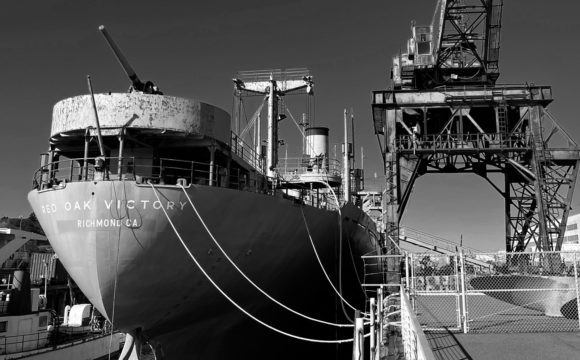
My sea kayaking club had a meeting aboard the SS Red Oak Victory, a World War II ammunition freighter that’s now a floating museum and event space. The vessel is operated as a nonprofit and has a cadre of volunteers keeping her (ahem) ship-shape. That meant I could reach out to the Red Oak Victory’s crew and staff, and relay that I was already familiar with the vessel, but that I also had a genuine interest in her story.
The SS Red Oak Victory is docked in the same (decommissioned) shipyard in which it was built, in 1944. Over 700 ships like her were made Richmond, CA, USA.
What I didn’t expect, but is painfully obvious in retrospect, is that the ship’s staff are all volunteers. You don’t volunteer aboard a vessel like that if you don’t have a passion for it. And they want to show off the object of their passion! I couldn’t possibly ask enough questions of the crew and staff, and they were all incredibly supportive…and excited that anyone would “bless” their vessel with as peculiar an interest as audio recording!
Find a location with people who dearly love it, and find an authentic way to be interested not just in the location, but to understand their passion and share it.
Lesson Two: Educate Stakeholders about Audio Recording
As a nonprofit organization, I was happy to throw some money at the Red Oak Victory in exchange for my time aboard. But how much? In my favor, the ship also acts as a performance venue and has a rate card for rentals, including for photography clubs and video production/filming.
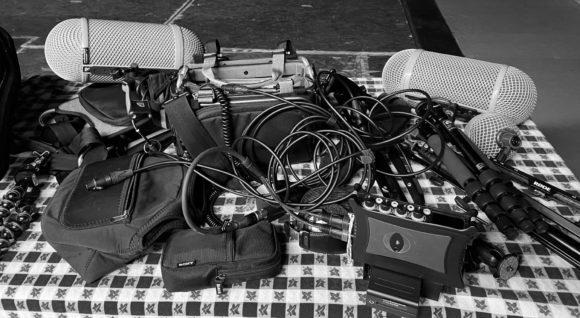
Equipment for the day in Cargo Hold Four.
But their director of marketing had said no one had ever just wanted to record audio there, and had no idea what was involved, so how would we price it? Rather than make a rate suggestion, I outlined how my footprint on the vessel would differ from that of a film or video crew. One person just moving multiple recording rigs around. They offered a rate that was a small percentage of the full video-crew rate, which that seemed fair to all parties.
We also discussed noise levels; I wanted a mix of quiet and ambient activity. Learning that the crew is tools-down from noon until 1pm for lunch, we picked a time that bridged both activity levels, and the results were great.
As a recordist, it’s your job to both respect the location as well as educate its gatekeepers as to what your impact will be on the location.
Lesson Three: Start Small
Recording an entire vessel is a daunting task, and being unsure how my presence would be received, I wanted to use that first visit to show that I could be trusted and would be respectful.
So I started small. Ambiences, small hard effects (hatches, doors, etc.), and things that would keep me out of peoples’ way. At the end of the session, it was the Red Oak Victory’s staff that asked if I wanted to come back some time; “Maybe the cargo hoist could be fired up for you, it makes cool noises.” Hey, maybe that ship’s alarm I wasn’t prepared for could be tested on cue? “Yeah, we can definitely do that.”
Another sub-lesson here was that I had not yet learned Lesson One, so I could have pushed harder than I did for more access and more involved requests, because they wanted to share their passion for the ship!
So, use your instincts and balance what you think the location’s gatekeepers will allow with what you hope to accomplish. And as I learned, sometimes there’s such a thing as starting too small.
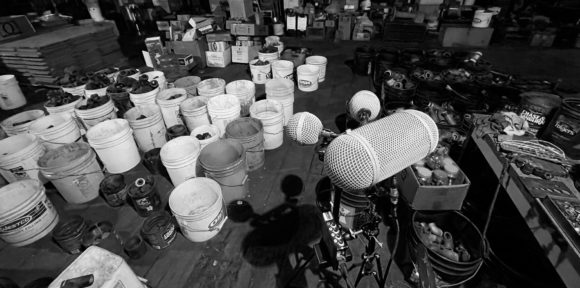
Recording in quad (double ORTF) in Cargo Hold Two.
Lesson Four: It’s All About Relationships
Like everything else in life (and certainly in professional audio), it’s all about building relationships. I had a great time, and so did the crew and the staff. We joked about how I botched a recording of the coolest sound on the ship, and they laughed knowingly when I said it was the refrigerator compressor in the officers’ mess. Everyone felt respected and heard. And all parties are already talking about future visits. Heck, it turned out that they belong to an organization of other historic vessels, and maybe they could place a few calls on my behalf…
Even if you’ll only use a location once, build that relationship. Even if all you might need in the future is using that location’s gatekeepers as character references for others, you never know what connections might happen, even years down the road.
Yeah, yeah, yeah…but what did it sound like?
Here’s a sample of some of the recordings I made: This was recorded with a mid-side rig in the ship’s shaft alley, a 10-foot-wide by 170-foot-long corridor that houses the shaft that runs from the ship’s engine to its single rear propellor. I loved the ambient sounds of movement and work, which almost had an organized, musique concréte rhythm and dynamism to it.
The same winter storms that I mentioned in my last post also brought down a ton of fronds off the King Palm (Archontophoenix alexandrae) in our front yard. One can never have enough foliage source recordings, so… (the video below is just camera audio, not the Sennheiser MKH 50+30 mid-side rig I used to do the recording)
Field recording greatly improves one’s motivation to do yard work!
Here is a designed vegetation movement or destruction sound effect made from the material I recorded in this session. Soundcloud’s MP3 compression won’t be kind to this sort of material, but oh well!
California’s winter of 2022-2023 was one of the stormiest and wettest on record. Near-constant atmospheric rivers and wind events for four months generally made going outside A Bad Idea.
Not great news for those of us that like to do field recording. But, as often happens, constraints do wonders for spurring inspiration.
During one especially torrential downpour, I was thinking about how loud it was on the roof…but we have an attic crawlspace between us and the roof, so how loud must it be up there? I had just created a small, compact ORTF recording setup (Sound Devices MixPre 6ii, two Schoeps MK4/CMC1U microphones, Rycote blimp), and its size allowed me to put the rig in the crawlspace, and let it record all through the night while I slept.
The results were deliciously unusual: The rain was close-miked, but it was still clearly an interior perspective. Its volume drowned out whatever neighborhood noises there might have been. The open-faced insulation batting in the crawlspace created a space with almost no reverb. The result took reverb in post very well, providing flexibly usable interior rain and wind tones.
In fact, I now have a similar setup using a pair of Line Audio CM3 microphones ready to be put up into my attic at a moment’s notice; I keep it up there most of the winter, and just plug a 5-pin XLR cable into it, running to the recorder, whenever there’s a blustery day or some rain. This “attic rig” delivers gold pretty regularly…assuming I can record at night. There’s too much noise of general house habitation during the daytime hours. The CM3’s are no Schoeps, but they are a whole lot more expendable due to their lower price, in case of a leak, particulate matter, or rodents.
Here’s a composite of heavy winds, light rain and some wind, and heavy rain from a few different recording sessions.
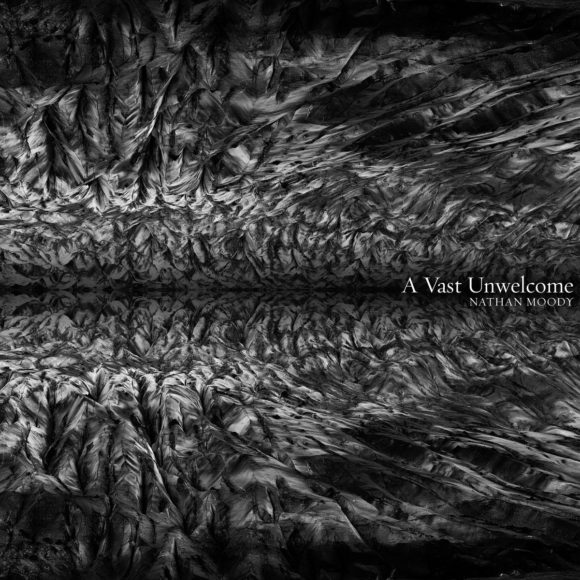
When I released the EP A Vast Unwelcome on March 31, 2023, I said it was my first metal album, a comment that was both cheeky and 100% accurate.
It wasn’t metal in genre, but rather in timbre: Every sound on the album was made from metallic objects, metallic instruments, or a handful of virtual instruments that physically modeled complex metallic instruments. Since the timbres and process were so particular, I thought I’d discuss the album’s origin, recording process, and post-production, as this project represents my happy place of the intersection of sound design and music.
It also is a great example of how projects can start as one thing, and then morph into something quite different, and that the creative process is usually anything but linear and predictable.
From Magic to Metal
This album started as a series of recording sessions for a crowdsourced magic sound effects sound library. I ordered a number of bells, chimes, shakers, and more, and specifically set about recording them at 192 kHz with ultrasonic-capable microphones to preserve their high-frequency content when subjected to extreme pitch shifting. I also used unusual recording techniques, like striking chimes and then dipping them into water, recording the result with a hydrophone (similar to this technique I posted about many years ago).
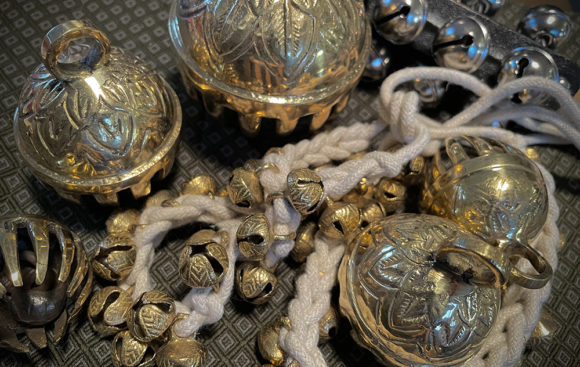
The objects recorded included a waterphone, a custom Tim-Kaiser-designed instrument known as the Icarus, elephant bells, sleigh bell shakers, ankle bells, tree chimes, and more.
Some of the instruments recorded in the sound design sessions that would later become a musical project.
My musical inspiration came during “stress-testing” these recordings by doing extreme pitch and time manipulation. Since ostensibly these objects were instruments, there were tones and intervals I was hearing that led me to start assembling musique concréte sketches, not unlike my process for my previous all-wind-in-wiresalbum, The Quivering Sky. I also started to integrate some field recordings I made aboard the SS Red Oak Victory, a restored WWII ammunition freighter. (More about those recording sessions in future blog posts.)
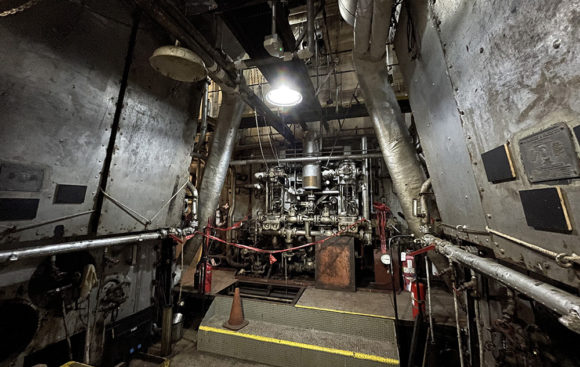
The main boilers of the SS Red Oak Victory, in the lowest level of its four-storey-tall engine room.
The first track of the album, “Phase Change,” is an example of where all of the songs started.
The Borders of Sound and Music
But I kept hearing harmonies in these recordings, and they started to turn out to be more musical than expected. In 2022, I got to know the software (and people) of Physical Audio, and it struck me that their virtual instruments would compliment these metallic tones perfectly…I mean, any company that makes a prepared-piano emulator is OK in my book! Derailer and Preparation could be traditionally tonal and melodic, or loaded with loads of inharmonic partials and resonances. These two instruments wound up being good aesthetic fits for this project.
The track “Pruina” (the word for hoarfrost in Latin) is a good example of these virtual instruments integrating with other metallic tones.
Things kept progressing from there. I used techniques lifted from my own sound library, Metallitronic, to re-amp a some synthesized tones through gongs placed on large, powerful transducers. I unboxed some of my own self-made instruments made of springs, and bowed and struck a suspended sheet of steel in my garage. Much fun was had, but that thin plate of steel in the garage, hung from a c-stand, started to give me an idea…
The “Only Real Reverb” Rule
I started to put the stereo spring reverb in my studio to heavy use during the mixing stage, and one day I thought to myself, “Wait a second…I’ve got all this rich reverb from the SS Red Oak Victory sessions…this spring reverb sounds great, non-linear, and chaotic…why am I using virtual reverbs and delays at all?” This led me to give myself the challenge to discard all virtual reverbs in my mixes (despite my undying love for ValhallaDSP for most uses), and only use electro-mechanical reverbs.
That instantly made me think of plate reverbs. I asked around to see if any local studios had any plate units that were functional, and much to my surprise, the Skywalker Sound Scoring Stage had not one, not two, but three functioning EMT 140 plate reverbs. After a few phone calls, I found myself in this world-class facility re-amping stems through six channels of luscious, real-steel reverbs.
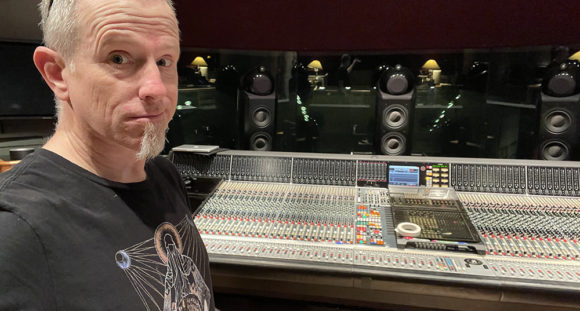
The control room of the Skwalker Sound Scoring Stage.
While EMT 140 units ostensibly have a 3-5 second maximum decay time, I did the ol’ Walter Murch trick of bringing some stems varispeeded up by an octave, playing back twice as fast. We tracked all the EMT 140 returns at 96 kHz, so back in my own studio I varispeeded those returns back down…now I had 8-10 second reverb tails from real plate reverbs. Most of the final mixes actually have a full six channels of plate reverb on them, and there are no virtual reverbs anywhere on the album.
This felt like a logical conclusion to the album’s all-metal creative constraint.
From Music to Meaning
The recording sessions happened during an unusually brutal and long winter, and the steely tones of the works started to feel like both a paean and a dirge to winter itself. This became the compositional focus of the album, which influenced the songs, their titles, and the cover art (a glacier in Iceland, photographed by me). As friends’ neighborhoods were literally crushed under the weight of snow and local areas flooded from winter rains, the music turned out dark but with a core ray of hope, at least to my ear.
But of course sound and music only has meaning given to it by the listener. My intent is mine alone, and whether that comes across to those experiencing it is out of one’s hands. That’s the essence, terror, and joy of releasing art into the world.
I found myself at Jack London Square in Oakland during San Francisco Fleet Week. The majestic Lady Washington was in port, so I skulked around with my Sony PCM-D50 field recorder (I was there for other purposes, so I wasn’t toting around my full field recording kit).
It was a foggy morning and the air was still, and the ship wasn’t really making any sound. Its dock, though, sure was. It wound up being one of my favorite sounds in some time, between the metal strains, the rubbing of rubber, and the lapping of water.
Even more interesting was the jazz quartet that set up mid-deck on the Lady Washington around lunchtime. I don’t know what they were playing, but here it is, regardless, recorded about 60′ away. Loads of people to the right of the stereo field, nothing but open bay to the left.
When I was a kid, I loved jets. Like most boys, I seemed to love vehicles of all sorts. That all waned as I got older, but fast fighter jets are pretty impressive machine…even if the US Navy’s Blue Angels make my blood boil with their noise, and when I think that my tax dollars pay for all that jet fuel in their F/A-18 Hornets.
Nevertheless, as an audio recordist, jet fly-bys aren’t that easy to get on cue. So, every year, I try to record the Blue Angels over San Francisco during Fleet Week. I always say I’ll go somewhere and record them, but life gets in the way on the weekends. But Thursday and Friday beforehand, they do practice runs over the city.
I planned to go onto the roof of my workplace, but a bunch of tech hipsters got there first: Too much talking and reaction sounds. So I just stuck my Sony PCM-D50 out the window, in a small channel between skyscrapers.
When these things scream by, I was measuring between 40dB and 50dB over the background noise level…which, in an urban area is already between 40 and 70dBA. The PCM-D50 has pretty bad limiting – it actually is always recording at two different levels, and fades between the two, so it’s not even a real limiter. So you need to set your levels very carefully. I did a test on Thursday to get just two fly-bys on Friday that were relatively clean.
I liked how the sounds were rendered. The reverb off the tall buildings was nice, even though the background noise masked some of the jets’ approach. But in a city of 760,000 people, you take what you can get…
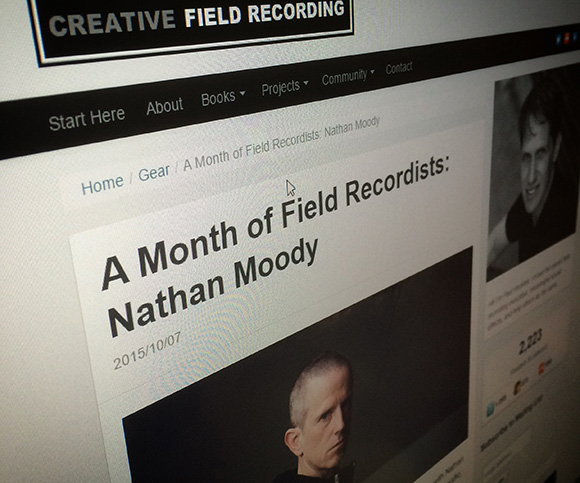
Paul Virostek of Creative Field Recording, focuses more on approach and technique than equipment, which I think is entirely appropriate. It’s all too easy to get caught in the vortex of gear over doing creative and innovative things with it.
However, it’s always interesting to know what people do use, and why, and what informed their decisions in doing so. To that end, Paul is in the midst of “A Month of Field Recording,†and yours truly was the latest to be profiled, among such field recordist luminaries as Frank Bry, Watson Wu, and many others.
I’m deeply humbled to have been asked to contribute to this series, and thank Paul for the opportunity. What’s more, I also need to thank the online recordist and sound design community, without whom I’d basically know nothing.  More than half of those being profiled by Paul this month are people who have exhibited nothing but excitement and patience in fielding my questions to them about gear, practice, and theory.
I’ll be the field recordist for the second Aeolian Day, put on by Thingamajigs, at Jack London Square, Oakland, California! The event is Sunday, May 31, 11am-4pm, and coincides with the weekly farmer’s market there. You can help the local art scene – which has been locally challenged by gentrification and rising Bay Area rents – and fill your face with awesome Bay Area eats!
Come check out a whole day of wind-driven art, and the sounds that they make! And if you see the guy with the boom pole, please do say hi…just, please, not while I’m rolling… :-D
Thingamajigs will be doing fun stuff with the audio and video, too, so keep an eye on their website for more!
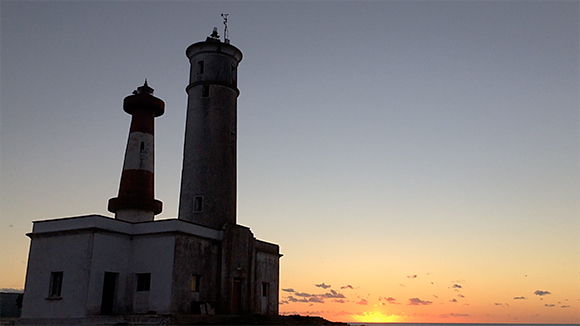
We had two days of 15-25 knot winds, and as you might imagine, a lighthouse is a roughshod place. The winds were howling through the old windows and making amazing sounds.
Only one problem: I had a small sea kayak with no room to even pack a handheld field recorder. As I’ve said many times before, the best field recorder is the one you have with you, and this case, my only option was my iPhone. In glorious, shimmering mono.
Today’s sound are of these howling winds, recorded with the Voice Memos app on iOS. I’m not about to make a habit of using my iPhone as a field recorder, even with aftermarket microphones, but hopefully this goes to show that sometimes you do the best with what you have. Especially if the sounds and location are literally once-in-a-lifetime events.